


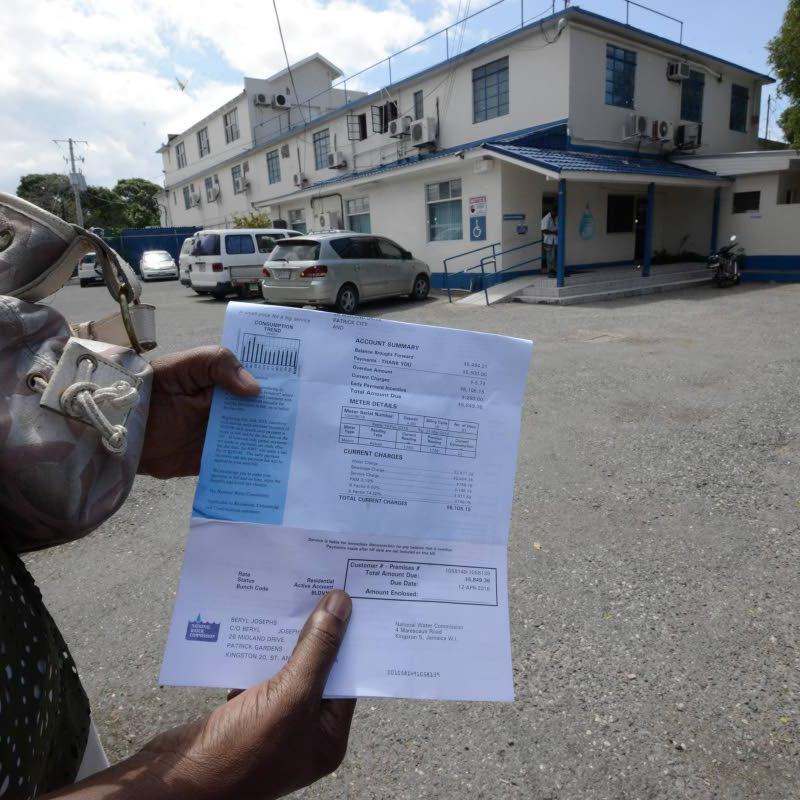
The Office of Utilities Regulation (OUR) is expected to make a determination by summer on whether the National Water Commission (NWC) should adopt a fixed billing cycle, following consumer complaints about bills covering more than a month’s usage.
The NWC, the water and sewerage utility provider, currently operates on a monthly billing cycle that typically ranges from 27 to 33 days – but sometimes extends beyond that. The OUR, which regulates the sector, noted that “there is a direct correlation between the number of billing days and the associated charges”, adding that bills exceeding 31 days have triggered disputes over high consumption.
Between January 2020 and December 2024, billing issues accounted for 69 per cent of NWC’s customer contacts, with 4,177 complaints logged. “Among the high consumption-billing complaints are those that relate to bills which cover billing cycles in excess of 31 days,” the regulator said.
“Consequently, the OUR has decided to undertake an in-depth assessment of the impact of the absence of a maximum number of days for the NWC billing period,” stated the regulator.
NWC’s tiered rate structure means charges escalate with usage. For residential customers, water rates rise from roughly $680 for the first 3,000 gallons to roughly $2,250 for usage above 9,000 gallons – a 71 per cent increase. Sewerage charges follow the same pattern. Longer billing cycles can push customers into higher tiers, magnifying costs, the document indicated.
“It is apparent that as consumption increases from one tier to the next for residential customers, so do the rates from a low of 9.0 per cent to a high of 78 per cent,” stated the document.
Businesses face similar exposure. Commercial customers pay roughly $2,600 per two-million gallons, but rates fall by 42 per cent above that threshold. Variability in billing days can distort consumption patterns and complicate financial planning.
The OUR is weighing whether to impose a maximum billing period, as it did with electricity provider JPS in 2008, when it capped billing cycles at 31 days. A fixed cycle, the regulator argues, would “allow for fairness in measuring and billing for consumption-based services” and simplify accounting compliance.
“However, the main water and sewerage service provider, the NWC, is not limited in the number of days it can bill customers,” stated the OUR document.
Still, the consultation acknowledges trade-offs. Aligning bills with calendar months offers predictability for consumers, but fixed cycles may complicate utilities’ month-end reconciliation.
With thousands of households affected, the OUR invites public input ahead of issuing its planned determination.
The OUR acknowledges that the NWC currently uses a monthly billing cycle, meaning, it prepares and dispatches bills to its customers every month. However, based on its assessment and complaints received, the OUR has recognised that the number of days in each monthly billing cycle varies, “which can negatively impact customers, particularly residential customers”.
business@gleanerjm.com