


Jamaica can run fully on renewable energy, according to the architect of Uruguay’s landmark energy transition, who urged the island to move beyond incremental targets.
“I will assure you that it will be more than 90 per cent,” said Dr Ramón Méndez Galain, speaking at the annual Maurice Facey Lecture Series at the Jamaica Conference Centre on Wednesday under the theme ‘Breaking the Grid: Charting Jamaica’s Path to Renewable Energy’.
He pointed to institutional readiness, proper grid optimisation and policy alignment as the real constraints holding Jamaica back.
“The transition is not even a cost issue. It’s not a technology issue,” Méndez Galain said, adding that current policy targets underestimate what is technically and economically feasible.
Jamaica targets generating 50 per cent of its electricity from renewables by 2030. The national grid carries roughly 1.0 gigawatt of generating capacity, and the Government this year launched its largest-ever renewable energy tender in pursuit of that goal.
Méndez Galain served as Uruguay’s energy secretary between 2008 and 2015, guiding the country to generate 99 per cent of its electricity from renewables — hydropower, wind and biofuels — with fossil fuels accounting for the remainder.
The Uruguay model
Central to Uruguay’s success was binding, system-wide planning and long-term contracts — typically spanning 20 years — which reduced investor risk and sharply lowered financing costs.
“The cost of capital is almost everything,” he said. “The most important thing is to decrease risk perception by investors.”
He highlighted dramatic global cost reductions — solar down eightfold, wind threefold, and batteries by a factor of 10 over the past decade — arguing that the transition is now driven by economics rather than climate imperatives alone.
“This is economy, stupid,” he said.
For import-dependent countries like Jamaica, modelling suggests electricity production costs could be cut by as much as half under optimal renewable configurations.
Regulatory overhaul needed
Méndez Galain reserved his sharpest prescription for Jamaica’s regulatory framework, which he said was designed around fossil fuel generation and is incompatible with renewables.
“You need to have a very powerful policy regulatory governmental body, and a very powerful planning body,” he said, warning that weak institutions risk being dominated by private utilities with greater resources.
“We have to stop asking renewables to play the game with the rules that have not been made for them,” he stated.
Several key reforms he prescribed include redesigning power purchase contracts, strengthening regulatory independence, and institutionalising binding long-term planning processes.
Political will decisive
He cautioned that entrenched fossil fuel interests routinely slow reform.
“When you have incumbents, they have influence on governments,” he said, stressing that Uruguay’s success rested on cross-party consensus sustained across multiple administrations. “Long-term agreement by the entire political system — this is crucial.”
Jamaica’s heavy dependence on imported fuels and favourable wind-solar complementarity make it well suited for a rapid transition, he said.
“You have a tremendous, favourable context today.”
But ambition alone will not deliver results.
“The real answer is not political,” Méndez Galain said. “The real answer is technical. We have to optimise the system.”
neville.graham@gleanerjm.com
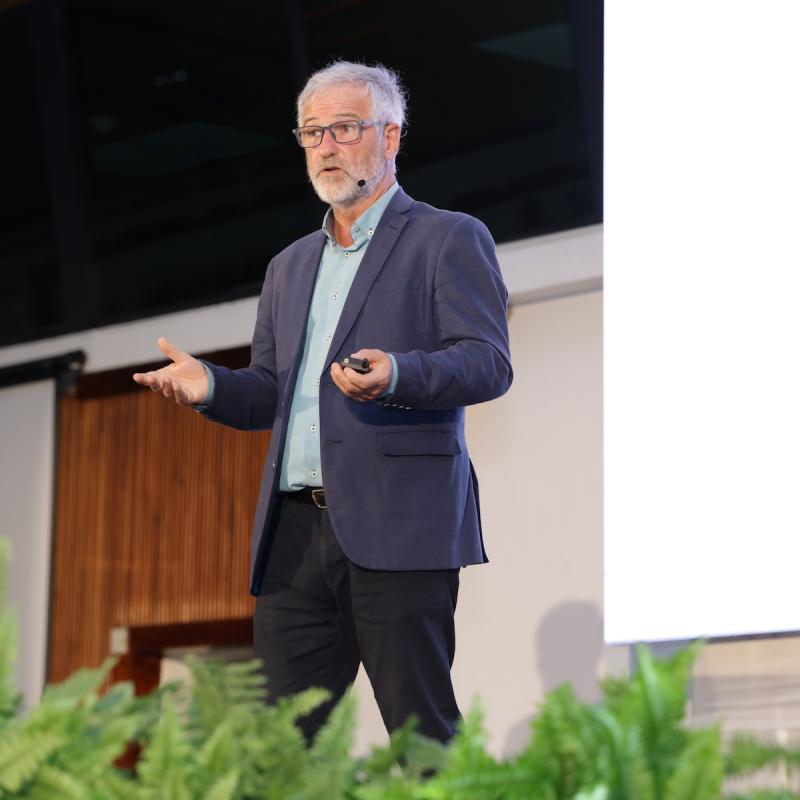
Caption: Dr Méndez Galain addresses the Maurice Facey Lecture Series last week at the Jamaica Conference Centre, encouraging the nation to transition to renewables.
Jamaica can run fully on renewable energy, according to the architect of Uruguay’s landmark energy transition, who urged the island to move beyond incremental targets.
“I will assure you that it will be more than 90 per cent,” said Dr Ramón Méndez Galain, speaking at the annual Maurice Facey Lecture Series at the Jamaica Conference Centre on Wednesday under the theme ‘Breaking the Grid: Charting Jamaica’s Path to Renewable Energy’.
He pointed to institutional readiness, proper grid optimisation and policy alignment as the real constraints holding Jamaica back.
“The transition is not even a cost issue. It’s not a technology issue,” Méndez Galain said, adding that current policy targets underestimate what is technically and economically feasible.
Jamaica targets generating 50 per cent of its electricity from renewables by 2030. The national grid carries roughly 1.0 gigawatt of generating capacity, and the Government this year launched its largest-ever renewable energy tender in pursuit of that goal.
Méndez Galain served as Uruguay’s energy secretary between 2008 and 2015, guiding the country to generate 99 per cent of its electricity from renewables — hydropower, wind and biofuels — with fossil fuels accounting for the remainder.
The Uruguay model
Central to Uruguay’s success was binding, system-wide planning and long-term contracts — typically spanning 20 years — which reduced investor risk and sharply lowered financing costs.
“The cost of capital is almost everything,” he said. “The most important thing is to decrease risk perception by investors.”
He highlighted dramatic global cost reductions — solar down eightfold, wind threefold, and batteries by a factor of 10 over the past decade — arguing that the transition is now driven by economics rather than climate imperatives alone.
“This is economy, stupid,” he said.
For import-dependent countries like Jamaica, modelling suggests electricity production costs could be cut by as much as half under optimal renewable configurations.
Regulatory overhaul needed
Méndez Galain reserved his sharpest prescription for Jamaica’s regulatory framework, which he said was designed around fossil fuel generation and is incompatible with renewables.
“You need to have a very powerful policy regulatory governmental body, and a very powerful planning body,” he said, warning that weak institutions risk being dominated by private utilities with greater resources.
“We have to stop asking renewables to play the game with the rules that have not been made for them,” he stated.
Several key reforms he prescribed include redesigning power purchase contracts, strengthening regulatory independence, and institutionalising binding long-term planning processes.
Political will decisive
He cautioned that entrenched fossil fuel interests routinely slow reform.
“When you have incumbents, they have influence on governments,” he said, stressing that Uruguay’s success rested on cross-party consensus sustained across multiple administrations. “Long-term agreement by the entire political system — this is crucial.”
Jamaica’s heavy dependence on imported fuels and favourable wind-solar complementarity make it well suited for a rapid transition, he said.
“You have a tremendous, favourable context today.”
But ambition alone will not deliver results.
“The real answer is not political,” Méndez Galain said. “The real answer is technical. We have to optimise the system.”
neville.graham@gleanerjm.com