


Acado Limited, a Caribbean joint venture, must sell the local distribution rights to one of its insulin brands by September 2026 — or lose the right to complete a landmark acquisition, according to a Fair Trading Commission (FTC) ruling released this week.
The move aims to protect an estimated 250,000 Jamaicans living with diabetes, who rely on one of three insulin brands. The acquisition would reduce the number of companies selling them to a single entity.
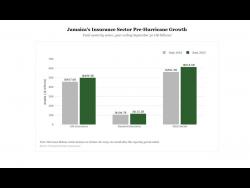
“Health Brands, [an affiliate of Acado] distributes approximately $30 billion of intermediate-acting insulin, which is 81 per cent of the market in 2024,” the FTC report states. “Massy Distribution Jamaica distributed the remaining 19 per cent throughout the market in 2024.” These figures were redacted in the public document but were revealed when the text was copied and pasted.
The FTC’s executive director David Miller indicated in response to Financial Gleaner queries that a duopoly market is known to support competition in ways that a monopoly could not. “In this situation, the FTC’s intervention therefore preserved the conditions for competition, helping to ensure consistency of supply and competitive prices for insulin patients,” he added.
The FTC made the divestment order as a condition of its non-objection to the acquisition of Massy Distribution (Jamaica) Limited by Acado, equally owned by Trinidad-based Agostini and Barbados-based Goddard Enterprises. Two companies currently distribute the island’s three available diabetes drugs. Aventa, an Agostini subsidiary, sells Eli Lilly’s products, while Massy Distribution sells those of Novo Nordisk and Sanofi.
Once the merger closes, all three brands would sit under one owner. “The merger would effectively change the insulin market from a duopoly to a monopoly,” the report states, warning that a single distributor in full control “could lead to higher prices”.
The FTC went further, warning that even if a new competitor wanted to enter the market, the barriers were too high and the process too slow to protect patients from price increases. “To the extent that successful entry has not been observed in the market for insulin despite significant revenues generated by the two distributors, the FTC concludes that there is a significant impediment to entry, which makes competitive entry unlikely,” the report stated.
Patients cannot simply switch brands when costs rise, the FTC reasoned, describing insulin demand as “price-inelastic since it is a life-saving product with limited alternatives.” Doctors, health insurers and patients all resist medication changes — a pattern the FTC called “consumer inertia” that makes the market especially vulnerable to monopoly pricing.
The report’s market share data was largely redacted, though it noted the merger would result in “100 per cent” market share across key sub-markets. By the regulator’s own concentration measure, the Herfindahl-Hirschman Index, four of the five insulin sub-markets would reach a score of 10,000 post-merger – a perfect monopoly.
To approve the deal, the FTC ordered Acado to transfer the Eli Lilly brand to a fully independent distributor by September 2026. Until that handover is complete, an independent monitor must file monthly reports to the FTC on sales volumes and pricing. The regulator was clear that “Acado/Aventa will maintain the full economic viability, marketability, and competitiveness of the Eli Lilly insulin business until the new distributor takes over” — and that the new distributor must have no affiliation with any party to the transaction.
Massy Distribution Jamaica represents over 100 drug brands sold islandwide. Aventa Jamaica supplies over 500 pharmacies across the island and serves more than 2,000 doctors.
steven.jackson@gleanerjm.com