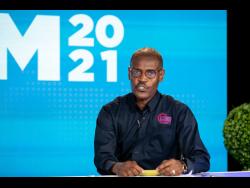


Minority investor Orrette Staple would start the same way at annual general meetings: “Mr Chair, with your permission, I would like to ask questions, but before I do I also have some observations.”
What followed –for the better part of three decades – was a performance that CEOs and minority shareholders knew well. Some appreciated it. Others vocally disapproved.
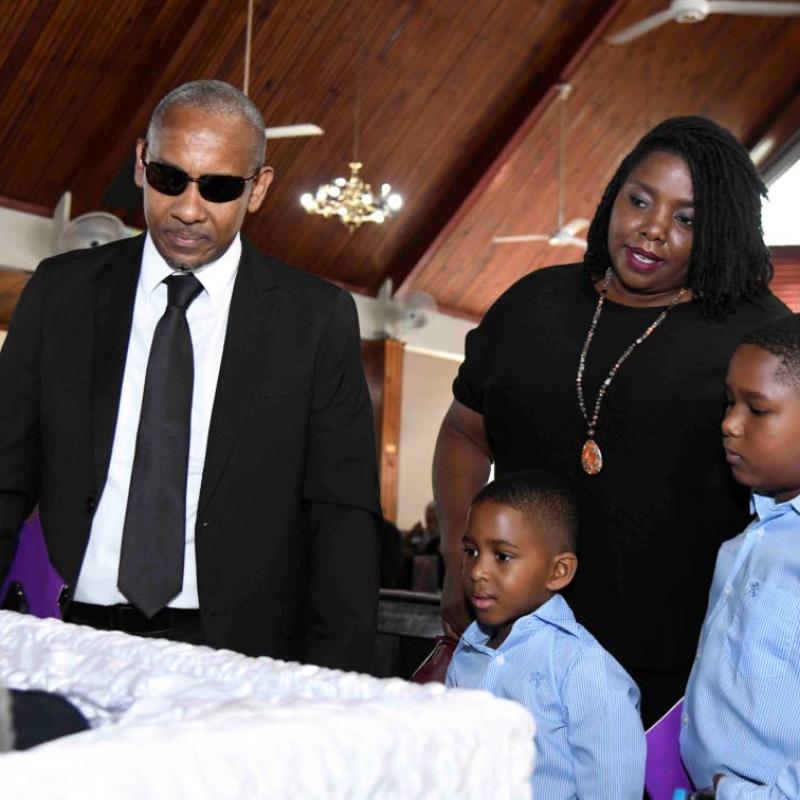
Staple, who died last month aged 80, was farewelled on Thursday at a thanksgiving service at Meadowbrook United Church in Kingston.
He was an unlikely activist investor. A graduate of Mico College in 1966, he worked as a teacher and probation officer before spending years at ESSO Standard Oil and later Petcom. But somewhere along the way, Staple became a shareholder – and once he did, he read every page of every annual report, and he expected to be taken seriously.
“His questions pushed companies to explain issues that might otherwise have gone unexamined, ensuring that ordinary shareholders had the clarity they deserved,” said Frank James, Group CEO of GraceKennedy, in tribute.
The rebuke at the Pegasus
His finest hour – or at least the one most retold in Kingston’s financial community – came at NCB’s 2013 annual general meeting at The Jamaica Pegasus hotel in New Kingston. Profits had fallen 28 per cent to $10 billion, the first decline after seven consecutive years of growth under Managing Director Patrick Hylton. Yet pay for the bank’s two executive directors had risen by roughly one-third.
Staple addressed the meeting for more than 20 minutes. “You cannot be serious about reducing expenses when you have this magnitude of remuneration and fees,” he told the room. When he pressed the board on who had approved the increases, the hand that went up belonged to Chairman Michael Lee-Chin – one of the wealthiest men in the Caribbean. “Mr Staple, just stop there,” Lee-Chin said. “If you look at international standards and judge management compensation by those standards, you wouldn’t want to open that can of worms.”
Staple did not stop. He rarely did.
He was the kind of shareholder who noticed when a conglomerate spent an extra $100,000 on “other expenses” and demanded to know why. He insisted that full audit reports be read aloud at meetings – as the law required – much to the visible frustration of boards who preferred to summarise.
He addressed executives with the tempo of a cross-examiner, his “booming voice and strong convictions” recalled Mark Williams, CEO of Kingston Wharves, in his tribute. He was, by the accounts of those who knew him, entirely without personal malice. He simply believed that the law meant what it said and that ordinary investors deserved to know.
“For decades, he did the homework, did the analysis, and showed up at the AGMs of corporate Jamaica. He was fair,” said Jeffrey Hall, CEO of the Pan Jamaica Group.
A tradition thinning out
Staple was not the first activist investor. Accountant Sushil Jain, who died in 2017, was one. Ralph Chen, who died in 2013, was another. And before them, Clifford Burrows – each with their own style and preoccupations, each contributing to a culture of shareholder questioning that has no obvious successor.
It is a culture markedly different from the largest US exchanges, where analysts from investment banks dominate the floor and minority investors are largely sidelined. Staple recognised this and defended it in his own way.
His views were not always contrarian. On dividends, he aligned firmly with the large shareholders. Pensioners, he argued, needed higher payouts to survive, and boards should not treat retained earnings as a default.
Beyond the AGM floor
He served on the credit committees of several credit unions, where Dr Maxine Henry, general manager of the Palisadoes Co-operative Credit Union, said his questioning “made me feel like I was before a judge in court”. His attendance record, she said, was perfect.
Earl Jarrett, CEO of the JN Group, said Staple pored through hundreds of pages of reports annually and made specific recommendations for improvement.
The shift to hybrid and virtual meetings with the onset of COVID-19 curtailed the cut and thrust of AGM debate on which Staple thrived. His protest was arguably evident in the growth of his afro.
“I will take my seat for now,” he often said at AGMs, “to allow others to ask questions.”
steven.jackson@gleanerjm.comluke.douglas@gleanerjm.com