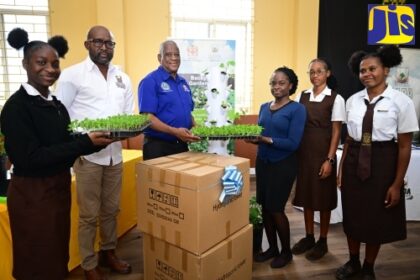


The Ministry of Education, Skills, Youth and Information is encouraging students to participate in the Bureau of Standards Jamaica (BSJ) Food Safety Essay and Poster Competition.
It is in observance of World Food Safety Day on June 7.
The annual competition, now in its third year, forms part of the BSJ’s public education drive to promote safe food-handling practices and foster a culture of responsibility and informed decision-making among young people.
This year’s theme, ‘After the Storm, Keep Food Safe, Stop Leptospirosis’, is designed to highlight the critical link between food safety and disease prevention, particularly in the aftermath of Hurricane Melissa.
Students between the ages of six and 18 are invited to submit creative pieces for the competition, which will run from March 26 to April 24, 2026. At the primary level, students from grades one to three are required to submit essays of between 250 and 500 words, while those in grades four to six must submit essays ranging from 400 to 700 words. Poster submissions for both categories must be completed on cartridge paper.
At the secondary level, students in grades seven to nine are required to submit essays of between 800 and 1,200 words, and between 1000 and 1,500 words for those in grades 10 to 13.
Posters for these categories must be digital, sized 36” x 48”. Entries may be submitted via drop-off at the BSJ offices, located at 6 Winchester Road, Kingston 10, or by email to cpu@bsj.org.jm.
All submissions will be evaluated based on adherence to competition rules, clarity, creativity, and relevance to the theme of food safety.
Prizes include laptops, tablets and cash. For additional information, persons may call 876-332-8783.
The BSJ is an agency of the Ministry of Industry, Investment and Commerce. The agency plays a critical role in safeguarding food safety through standards development, testing, and training.
Through its annual Food Safety Competition, the BSJ aims to educate, engage, and empower students to become advocates for safe food practices in their homes, schools, and communities.