


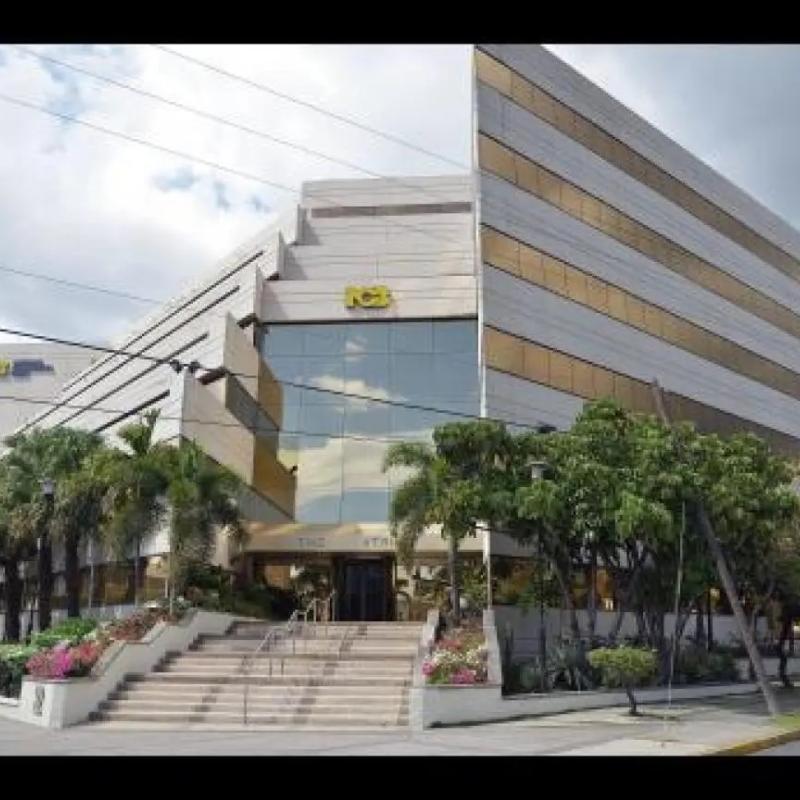
The nation’s largest commercial bank, National Commercial Bank Jamaica Ltd (NCB), has placed roughly three dozen repossessed properties on the market carrying a combined assessed value exceeding $2 billion, spanning 10 parishes.
It is one of the largest single private treaty listings the bank has published in recent memory.
“We invite offers,” NCB stated in a full-page advertisement in The Sunday Gleaner.
The portfolio ranges from a $4.5-million agricultural lot in Cheltenham, St Elizabeth, to a $312-million commercial complex at 8-12 King Street and Temple Lane in Kingston, and includes residential homes, commercial buildings, agricultural land and resort-linked apartments.
NCB initially responded stating that they were “checking” information but did not immediately respond up to press time.
A private treaty sale is the mechanism Jamaican banks use to dispose of repossessed collateral without going to public auction. When a borrower defaults on a mortgage or secured loan, the lender is entitled under Jamaican law to take possession of the pledged asset and sell it to recover the outstanding debt. Properties are sold “as is”, with no warranty on condition, and buyers are expected to conduct their own title and boundary due diligence before committing.
The pipeline is led by nine St Andrew properties — suggesting pre-existing urban mortgage stress rather than purely hurricane-driven defaults. Notable among them are a $120-million residential building on Worthington Terrace and a $110-million commercial building on Laws Street.
The listings also extend into the tourism and agricultural belt. A resort-linked apartment at the Palmyra Resort and Spa in Rose Hall, St James, carries a market value of $65 million. Three Trelawny properties, including a 183-acre agricultural holding at Brampton valued at $125 million, bring that parish’s contribution alone to $240 million. St Mary contributes three properties worth a combined $263.5 million.
The picture reflects a post-Melissa credit environment that regulators had flagged as a rising risk. The Bank of Jamaica (BOJ), which oversees the sector, warned that loan defaults across the banking system could roughly double as the economic fallout unfolded. While an early reading suggested the feared spike had not fully materialised — non-performing loans which are unserviced loans for three months and more, totaled 2.8 per cent of total loans, or “relatively unchanged” year on year, according to the BOJ’s Financial Stability Report published this year. It is also below the 10 per cent threshold considered a threat to financial stability — analysts cautioned that the real stress test would come once temporary relief measures lapsed.
That moment has arrived. The NHT’s six-month mortgage moratorium, extended to borrowers across the seven parishes worst affected by Melissa, expired on April 30. Only a further three-month grace period remains available to mortgagors whose properties are still uninhabitable or severely damaged. For households whose income has not recovered — particularly those dependent on tourism and agriculture, the two sectors hardest hit by the storm — the resumption of mandatory payments has sharpened the risk of default.
The broader economic backdrop reinforces the pressure. According to the Planning Institute of Jamaica, the economy contracted by an estimated 5.9 per cent in the January-to-March 2026 quarter, with a further contraction of between three and four per cent projected for the April-to-June period as industries continue to recover from the hurricane damage.
business@gleanerjm.com