


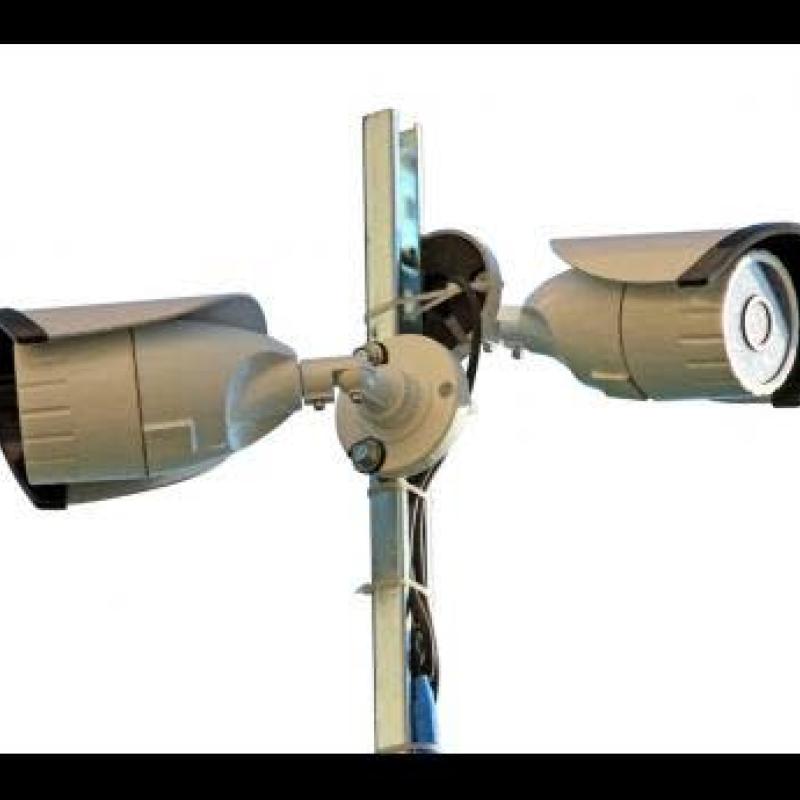
The Government has approved close to $790 million in new contracts for the expansion and maintenance of its JamaicaEye surveillance network, with the bulk of the spending directed at Portmore, St Catherine, according to contract award notices obtained by the Financial Gleaner.
The awards come as Jamaica grapples with balancing the public’s interest in safety against citizens’ right to move freely without being tracked by the state.
The larger of the two contracts, valued at $439.4 million, was awarded on July 21 to local firm, Sitewatch Electronic Security Limited through restricted bidding for the supply and installation of 300 CCTV cameras and associated devices and infrastructure for JamaicaEye in Portmore. A second contract worth $351.1 million was awarded three days later to local firm Konnexx Services Limited on a single-source basis for maintenance and related services for the JamaicaEye system islandwide.
Both contracts were funded by the Government of Jamaica, according to published award notices.
The Ministry of National Security confirmed the contracts but declined to provide further details about camera deployment, saying the information “cannot be shared at this time due to the sensitivity of the project and the strategic decisions to be taken”.
The ministry also asked that the names of contractors not be published, however, contract award notices are public records under Jamaica’s procurement rules. Additionally, the Jamaica Constabulary Force said it was unable to comment.
Security experts welcome investment
Security consultant Dr Jason McKay welcomed the expansion, describing JamaicaEye as an important investigative tool.
“This investment in infrastructure is what is needed to provide investigators valuable technology to track offenders,” McKay said. “I have seen this technology used in several high-profile court cases, including murder.”
He added that spending on such resources provides a solid return to the security forces, and society alike.
“This is where we need to spend money, where we can help victims of crime to develop trust in the system,” he added.
The Portmore expansion follows years of calls for greater surveillance coverage in one of Jamaica’s most densely populated urban areas, where some residents have complained that criminal activity outpaces police resources.
Balancing safety and civil liberties
The spending, however, also arrives at a moment when governments internationally are facing sharper questions about the scope and oversight of public surveillance networks. In the United States, the licence plate reader company Flock Safety announced changes to its platform this week after more than 50 law enforcement agencies cancelled or suspended contracts following documented cases of officers misusing surveillance data for personal searches. Civil liberties groups there have argued that mass camera networks amount to warrantless surveillance of entire populations.
Jamaica’s situation differs in important respects. The country recorded 673 murders in 2025, a 40 per cent decline from the prior year and the lowest annual total in more than three decades. But safety remains a pressing concern even as the homicide rate moves closer to the Caribbean average, and residents in communities such as Portmore have actively demanded more visible security infrastructure.
Still, the expansion raises questions that Jamaica has yet to resolve in practice. The Data Protection Act, passed in 2020, establishes a framework for how personal data is collected, used and protected, but the Office of the Information Commissioner told Parliament in July that full enforcement of the law is not expected before 2028. It remains unclear how the Act applies to JamaicaEye footage.
business@gleanerjm.com