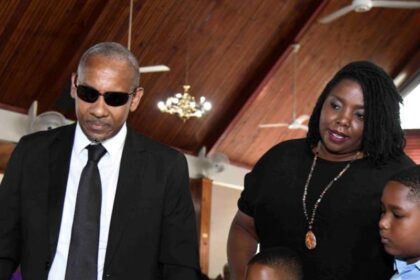



Minister of Finance and the Public Service Fayval Williams says that people expect a change in taxation arising from Hurricane Melissa.
“We have been the government that delivered 10 years of no new taxes. We are going through significant upheavals in the economy. I don’t believe that people will be expecting us to remain at that same level during the aftermath of Melissa,” the minister said, in response to a question at the Mayberry Investments Virtual Investor Forum on Wednesday from moderator Dan Theoc, who also heads investment banking at Mayberry.
She declined to give her opinion on whether taxes would be higher or lower. Mayberry Executive Chairman Christopher Berry added to the conversation: “Taxes will probably go down, because people need to recover.” Williams then acknowledged the strain placed on the economy and mentioned a series of “relief”, not “stimulus”, measures.
Melissa’s impact on the Jamaican economy was severe, disrupting agriculture, small business operations and key infrastructure across several parishes. In response, the Ministry of Finance rolled out what Williams described as a $10-billion “relief” programme aimed at helping vulnerable households, farmers and small firms get back on their feet. She was emphatic in rejecting the term “stimulus”, describing the intervention instead as necessary relief for those who had “suffered quite a bit”.
The measures included direct support to micro and small enterprises, emergency assistance to farmers through the distribution of seeds, fertiliser and technical support via the Rural Agricultural Development Authority, as well as help for traders to rebuild damaged shops and restore electricity, using generators. According to Williams, the results are beginning to show. She pointed to moderating food prices in markets and the speed with which farmers returned to production, noting she was “shocked” at how quickly fields became green and productive again only weeks after the hurricane.
Despite those green shoots, she acknowledged that the broader macroeconomic effects of Melissa are lingering. The Planning Institute of Jamaica has projected negative growth of between three and six per cent for the current fiscal year, with continued contraction expected next year, albeit at a slower pace. The recovery, Williams said, is likely to span at least two fiscal years before growth turns positive again.
Still, Jamaica’s fiscal credibility has provided an important buffer. International rating agencies have maintained the country’s sovereign ratings, with Williams highlighting that Moody’s even upgraded Jamaica after the hurricane — a move she described as “unheard of” following a disaster of such scale. She credited the layered risk-financing instruments and institutional reforms built up over the last decade, arguing that without them the economic and social fallout would have been far worse.
Looking ahead, the minister made a strong pitch for increased private-sector investment to accelerate reconstruction and long-term growth. She pointed to the establishment of the Recovery, Reconstruction and Resilience Authority as the coordinating body for major projects, with a clear mandate to partner with private capital. Of the US$6.7 billion in financing announced by multilateral institutions, US$2.4 billion has been earmarked specifically for private sector-led projects.
“Government can’t, and shouldn’t do it all,” Williams said, urging investors to participate in bankable projects capable of generating reliable cash flows.
Roads, water systems, ports and other infrastructure were among the areas she identified as suitable for public-private partnerships, noting recent private investment in the water sector as a successful example.
Beyond restoration, she stressed that projects must also build resilience and contribute meaningfully to GDP growth. Borrowing, Williams argued, can only be justified if it finances long-lasting capital investments that boost productivity and competitiveness.
That growth imperative, she suggested, may ultimately force difficult fiscal choices.
As the country rebuilds from Melissa, the finance minister’s message was one of realism rather than reassurance: Jamaica has weathered the storm, but the economic calm ahead may require shared sacrifice — and a rethinking of long-held fiscal red lines.