


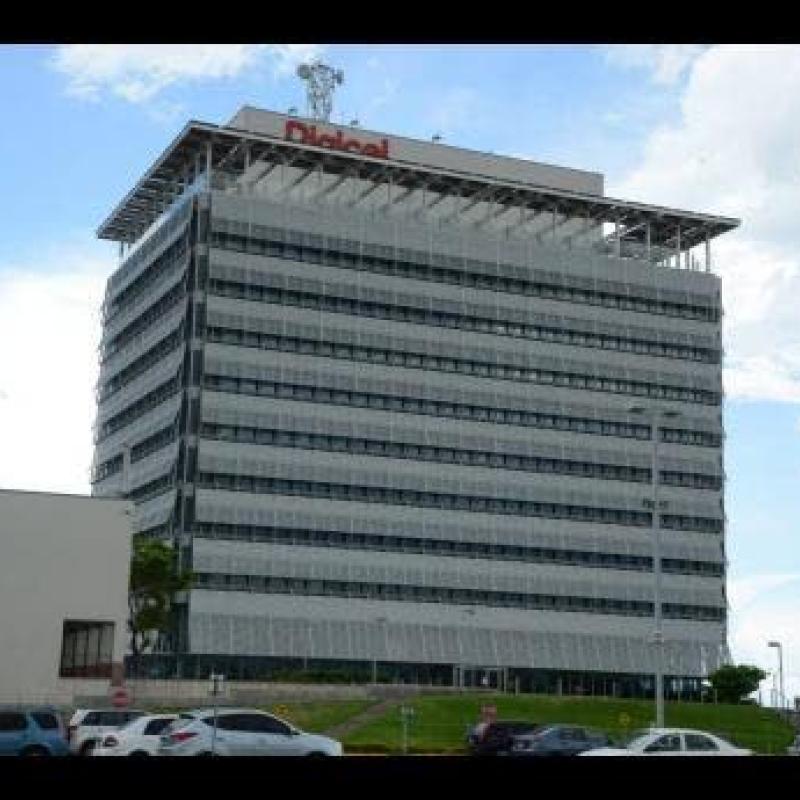
Telecom provider Digicel Group revealed that Ruby, its artificial intelligence (AI)- powered assistant, now successfully resolves more than half of the queries routed through it in Jamaica without human involvement.
Ruby augments rather than replaces human agents, according to the company’s 2026 Sustainability Report, released this week. Still, the scale of the roll-out offers an early case study in what AI-driven customer care looks like in a market known for outsourcing.
“Since its launch in Jamaica, Ruby has supported more than 535,000 conversations, with the smart assistant successfully handling 55 per cent of interactions without the need for human agent support,” the report stated.
Jamaica is the first market where Digicel deployed the enhanced version of the assistant, with plans to expand Ruby across additional markets during the financial year ending March 2027. The company serves more than nine million customers across 25 markets.
Ruby, built on a platform developed by Canadian AI firm Ada, evolved during the financial year ended March 2026 from a knowledge-based support tool into what Digicel described as “an AI-powered smart digital assistant” available across WhatsApp, voice, web, and the MyDigicel app. It handles routine tasks such as checking balances, activating plans, paying bills, and resolving common technical issues. The company said the tool complements its customer care teams by “enabling them to focus on customers with more complex support needs”.
Digicel said the enhancements “respond directly to customer feedback, including the need for faster access to support, assistance outside traditional business hours, and greater flexibility in how customers engage with us”.
The company did not disclose whether it currently uses an outsourced customer service provider. Historically, Digicel operated one of the largest in-house customer care networks in the region. A 2015 filing with the United States Securities and Exchange Commission listed call centres in 16 territories, including Bermuda, Curaçao, El Salvador, Guyana, Haiti, Jamaica, Martinique, St Lucia, Suriname, Trinidad and Tobago, Turks and Caicos, Papua New Guinea, Fiji, Tonga, Samoa and Vanuatu. Digicel later sold its Pacific-based operations to Telstra in 2022.
The sustainability report did not address whether there were any workforce implications of Ruby’s expansion.
In May, Digicel published a privacy notice indicating that Ruby can collect a broad range of personal data during customer interactions. The notice states that the AI agent is authorised to assist with plans and subscriptions as well as general customer enquiries. It also discloses that customer data may be shared with roughly 30 third-party processors — among them ADA Support, which powers the chatbot, and AI model providers Anthropic and OpenAI — with servers located primarily in the United States, Canada and Europe. Customers, however, retain the right to speak with a human representative at any point during a call.
“We’re committed to protecting your personal data and being transparent about how it’s used, so you can interact with us with confidence,” stated Digicel in the notice.
The Financial Gleaner sent queries on the privacy notice to Digicel and awaits a response.
At its peak, Jamaica employed 60,000 workers in outsourcing in 2024. That’s now down by one-third to 40,000, according to a census by the Global Services Association of Jamaica. Annual earnings from the sector dropped an estimated 10 per cent to roughly US$900 million.
The Government has attributed the decline to a combination of reshoring by North American clients, rising local operating costs, productivity challenges, damage to facilities in western Jamaica from Hurricane Melissa, and the early effects of AI-driven automation.
Montego Bay, once the epicentre of Jamaica’s outsourcing boom, now bears the physical evidence of the contraction. More than 103,000 square feet (sq ft) of commercial space across at least seven properties has been sitting vacant on the local real estate—MLS system since October. That inventory doesn’t include the recent exit of another provider that occupied a 30,000 sq ft building.
business@gleanerjm.com