

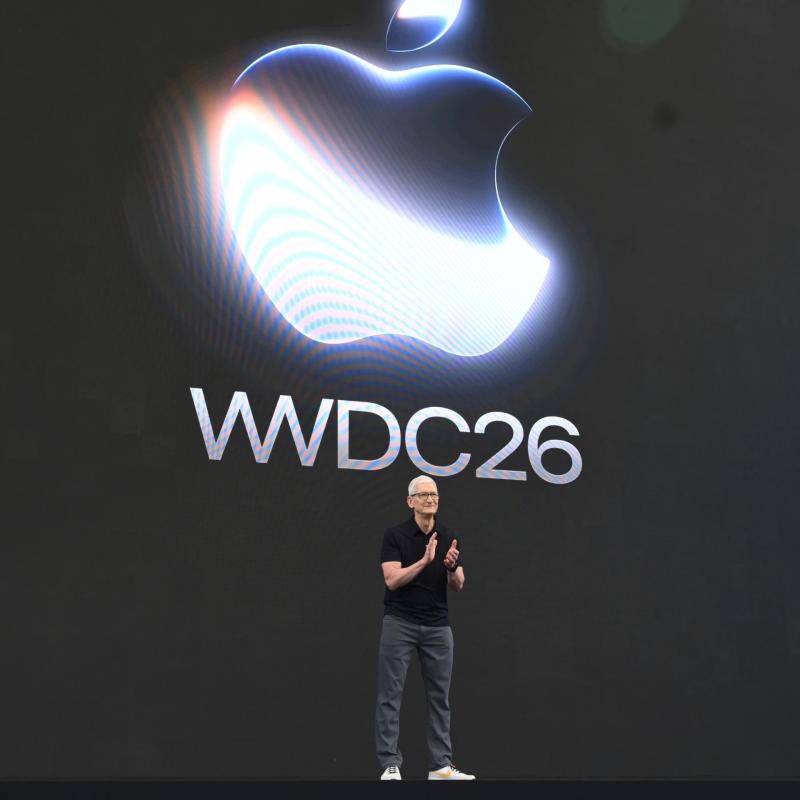
Many will disagree when I say Apple is not a company. Neither are Toyota or Microsoft. They are something else entirely.
Over the past five years, some of the world’s most admired companies have learnt an uncomfortable lesson: There is an invisible architecture behind every successful business, and it is often more important than the product itself.
Consider Apple
In 2025, Apple generated almost US$400 billion in revenue. Most people would attribute that success to design, innovation, customer loyalty and exceptional marketing. Few companies have mastered customer experience, anticipation, and desire quite like Apple. But Apple’s real advantage sits deeper.
The product that fits neatly into your pocket is supported by an ecosystem that spans the globe. Behind every iPhone is a vast network of suppliers, manufacturers, logistics providers, software developers, telecommunications companies, retailers, repair centres and technology partners spread across dozens of countries. The same principle applies to many successful companies. Nike is not simply selling footwear. Microsoft is not simply selling software. Toyota is not simply manufacturing vehicles. Each has built an ecosystem that allows it to create, distribute, support and continuously improve value at a scale that competitors struggle to replicate.
This is where many leaders are still using yesterday’s language to describe today’s reality.
Entrepreneurs get excited about growth. Investors get excited about innovation. Consumers get excited about products. Yet the businesses that survive disruption are not always the ones with the best products.
No one attends a conference hoping to hear a keynote on procurement, inventory management, supplier diversification or distribution networks. Procurement rarely gets standing ovations. Perhaps it should. Increasingly, the companies winning in the marketplace are distinguished by something far less glamorous.
They are ecosystems.
For decades, we were taught that businesses compete against businesses. The assumption was straightforward. Build a better product, create a stronger brand, deliver a better customer experience and the market would reward you.
Does that logic still matter? Yes it does, but it is no longer the whole story. Increasingly, businesses do not compete against businesses. They now compete against better ecosystems.
The Octopus versus The Chain
For years we spoke about supply chains. Then we graduated to discussing value chains. Both concepts remain useful. Neither fully captures what is happening now.
A supply chain suggests a straight line. Raw materials move from point A to point B until they eventually become a finished product. Modern business rarely works that way.
I think of them as the octopus of business. An octopus does not rely on a single limb. It reaches in multiple directions simultaneously. One arm connects to suppliers. Another to distribution channels. Another to technology partners. Another to specialist expertise. Another to capital. Another to new markets. If one arm encounters difficulty, the organism survives.
Many companies, by contrast, are still built like chains. Remove a single link, and the entire system can fail.
COVID-19 exposed that reality brutally. Manufacturers discovered that a missing component costing only a few dollars could halt the production of products worth millions. Semiconductor shortages delayed everything, from automobiles to consumer electronics. What appeared efficient suddenly looked fragile.
For more than three decades, business leaders pursued efficiency with near-religious devotion. Inventory was reduced. Suppliers were consolidated. Costs were squeezed. Lean became the management mantra. Global businesses became faster, cheaper and more efficient. They also became more dependent.
Resilience versus efficiency
The uncomfortable truth is that resilience and efficiency are not always the same thing. A backup supplier costs money. Additional inventory costs money. Alternative distribution channels cost money. On paper, those decisions may appear inefficient. Nobody boasts about supplier diversification on Instagram, yet it may save more businesses than marketing ever will.
Apple works with more than 9,000 suppliers in the United States alone across all 50 states, with an ecosystem spanning thousands of supplier facilities across more than 60 countries, covering manufacturing, assembly, logistics, software, telecommunications, retail and repair networks. Apple’s components alone come from more than 40 countries globally. Samsung works with 2,389 first-tier suppliers across 74 countries.
Toyota doesn’t simply buy parts from 60,000 suppliers. Rather, it orchestrates an ecosystem where suppliers supply suppliers, who in turn supply other suppliers before components ultimately reach Toyota assembly plants.
At some point we have to stop calling these supply chains.
They are ecosystems
The lesson extends far beyond multinational corporations. Many growing businesses focus almost exclusively on sales, marketing and customer acquisition. Yet the octopus of business — that silent operating architecture — determines whether growth can actually be sustained.
A business with one major supplier, one major client, one primary market and one critical distribution channel may appear healthy. In reality, it may be one disruption away from a very difficult conversation.
The strongest organisations must quietly build depth rather than simply pursue growth. They must diversify suppliers, expand partnerships, create multiple routes to market and embed themselves into broader ecosystems, rather than operating as standalone entities.
That shift may represent one of the most important competitive changes of our time. We are living through an era where products can be copied more quickly than ever. Technology diffuses rapidly. Marketing advantages are temporary. Innovation cycles are accelerating. The advantage that remains hardest to replicate is the ecosystem itself.
That is where the value increasingly resides. Customers may never see it. Investors may rarely discuss it. It certainly does not make for the most exciting conference presentation.
Many think brand equals company. Increasingly, the brand is simply the customer-facing expression of an ecosystem. Consumers think they buy brands. Investors think they buy companies. Increasingly, what both are really buying is access to an ecosystem.
Apple is not a company. Nike is not a company. Microsoft is not a company. At least not in the way we traditionally understood companies.
They are ecosystems.
And the businesses that win tomorrow will be the ones that learn to build them.
ABOUT
Dr Charlene Ashley is an international business strategist, organisational behaviour consultant, and marketing strategist with experience across more than 40 countries. She advises organisations on growth, transformation, leadership, and market competitiveness, bringing a global perspective, economic issues to business and economic issues affecting Jamaica and the wider Caribbean.