

Power utility Jamaica Public Service Company (JPS) and gas supplier New Fortress Energy (NFE) are locked in arbitration over a fuel-supply dispute worth a combined US$40 million (J$6.3 billion), with both sides pointing to a breakdown in operations at Montego Freeport as the root of the conflict.
The outcome could carry implications for electricity consumers and future energy suppliers alike.
“Arbitration proceedings commenced in the first quarter of 2026, and the company expects this matter to be resolved in 2026,” NFE stated in its quarterly filing with the United States Securities and Exchange Commission. “The company has accrued for the probable loss as of June 30.”
JPS initiated proceedings claiming damages of some US$32.9 million for the cost of using alternative fuel after infrastructure changes at the Port of Montego Bay disrupted deliveries from NFE’s liquefied natural gas terminal in 2024. NFE asserted force majeure — an unforeseeable event — under its supply contract and filed a counterclaim of US$7.2 million.
JPS operates under a regulated fuel-cost pass-through, meaning any increase in fuel costs flows into light bills. The arbitration will also set a marker for how force majeure clauses are interpreted in Jamaica’s energy supply contracts.
The dispute predates NFE’s exit from Jamaica. NFE sold its entire Jamaican business — including the Montego Bay LNG terminal, the Old Harbour LNG terminal and the Clarendon combined heat and power plant — to Texas-based Excelerate Energy for US$1.055 billion. The transaction closed on May 14, 2025.
Excelerate declined to comment on the arbitration. “This litigation predates our acquisition of New Fortress Energy’s operations in Jamaica and remains a legal matter. As such, it would be inappropriate for us to comment,” the company said.
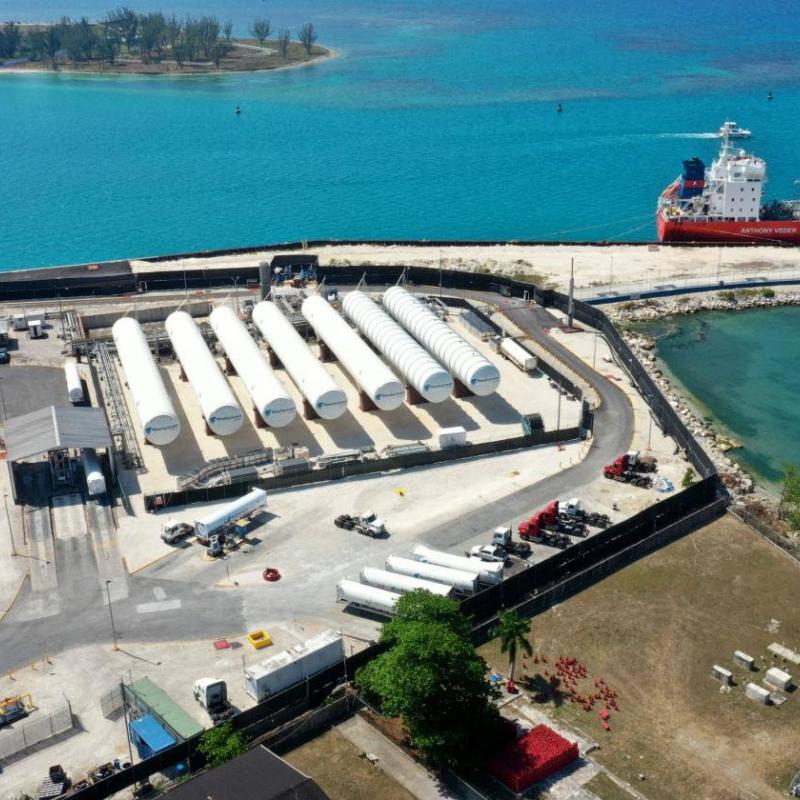
NFE had a contract to supply LNG from a facility at the port.
Efforts to obtain comment from representatives of both JPS and NFE were unsuccessful. A JPS representative said the company could not comment as the matter is now before an arbitration panel.
JPS, for its part, disclosed a dispute in its annual report, though it did not name the supplier. The power utility reported US$27.1 million in “other receivables” relating to amounts recoverable from a key fuel supplier.
“Based on the contractual arrangements, in the event of the non-supply of the product, under particular circumstances, the group can recover the price differential incurred in acquiring a suitable replacement product,” stated the report. “However, the supplier has indicated that they are not of the opinion that the circumstances giving rise to the non-supply of the product entitled the group to recover such additional cost,” JPS stated.
business@gleanerjm.com